PYROTransformer
.png "PYROTransformerBEST")
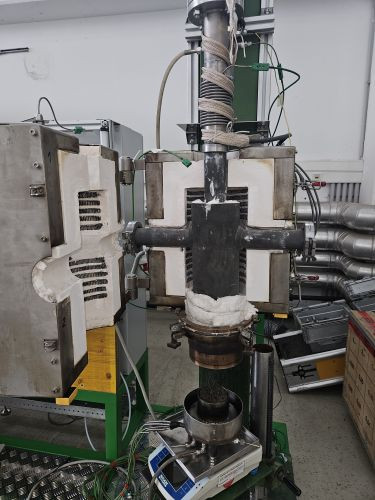
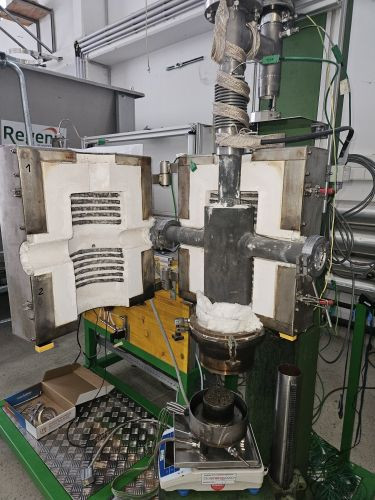
The PYROTransformer project investigates pyrolysis, a process for decomposing organic materials at high temperatures without oxygen. This produces solid, liquid, and gaseous products. The focus is on the influence of inorganic components on this process.
Project objectives
- Separation of inorganic and organic components: Many waste materials contain inorganic components such as metals or minerals. These need to be separated from the organic components so that both fractions can be better utilized.
- Optimization of products: The properties of the resulting products are to be improved through the targeted addition of inorganic substances, e.g., the quality of the biochar or the composition of the liquid and gaseous products.
Why is this important?
Inorganic components can influence the pyrolysis process by acting as catalysts, changing the composition of the products, or disrupting the process. A better understanding of these interactions enables process optimization and improved product quality.
What materials are being investigated?
The project primarily investigates waste materials that are difficult to recycle:
- Composite materials (e.g., composites made of plastic and metal)
- Municipal waste (e.g., household waste containing glass, stones, or metals)
- Biogenic waste materials with a high ash content
These materials often accumulate in large quantities and are difficult to recycle. Pyrolysis offers a robust solution here.
Challenges
There are technical challenges involved in pyrolyzing these materials:
- Conveyability: Inorganic components can cause blockages.
- Production of mixtures: The mixing ratio and the mixing process must be precisely defined.
- Melting behavior: Plastics can melt when heated and contaminate and block plant components.
- Pollutants: Some waste materials contain harmful substances that require special handling.
Significance of the project
PYROTransformer is helping to make pyrolysis technology usable for a wide range of residual materials. This is an important step toward a circular economy in which residual materials are efficiently recycled. By optimizing the pyrolysis process, we can improve product quality, increase efficiency, and find new applications for residual materials that are difficult to recycle.
Start of project
2025-12-01 (ongoing)
Supported by
More detailed information about the IBW/EFRE & JTF program can be found at www.efre.gv.at 
Contact

Irene SEDLMAYER
irene.sedlmayer@best-research.eu
Area Management
Elisabeth Wopienka / Manuel Schwabl
elisabeth.wopienka@best-research.eu manuel.schwabl@best-research.eu